Timeline: 6 months
Role: UX and UI Design
This was part of the Google UX Design Certificate
Overview
- Target Audience
- Key Features
- Design Process
- Next Steps

1. Target Audience
An independent art store is not just a place where art supplies and materials are sold, but also a vibrant space where local artists can showcase and sell their work. The primary goals of the store owner include:
- Promoting Local Artists: Creating a vibrant and inclusive art community where artists can thrive.
- Offering Unique and High-Quality Art Supplies: Providing art supplies that are not available in larger stores, ensuring a distinctive shopping experience.
- Creating an Inviting Atmosphere: Making the art store a warm and inspiring space where artists and art lovers feel welcome. The store often hosts workshops and offers personalized recommendations and advice.
To achieve these goals, the owner and their staff need to be friendly, knowledgeable about different art styles, mediums, and techniques, and able to provide expert assistance to shoppers. The in-person shopping experience must surpass that of online retailers and large chain stores to ensure the business’s success. However, the small independent art store cannot afford a large surplus of employees due to cost constraints. Therefore, efficient time management of employees is crucial, freeing up the owner’s time for other responsibilities such as marketing and networking.
The key challenge the app needs to address is that the owner’s strengths lie in art and creativity, not in inventory and administration. They need an easy and intuitive software solution to manage their staff effectively. Additionally, the app needs to be aesthetically pleasing to appeal to the art-loving users and encourage them to use it over more utilitarian competitors.
2. Key features
For the timesheet app, I conducted a competitive analysis of 10 existing time-tracking apps to identify the most relevant features for my target audience. After thorough analysis, I focused on the following features that best meet the needs of the independent art store’s staff and management:
- Time Tracking (Manual and Automatic): Employees can log their work hours in real-time or manually enter them later, ensuring flexibility and accuracy in time management.
- Reporting and Analytics: Managers can generate comprehensive reports on work hours, overtime, and project allocations to ensure accurate payroll and resource management.
- Timesheet Approvals: A streamlined process for managers to review and approve timesheets, reducing administrative overhead and ensuring accuracy.
- Integration with Calendars and Other Apps: Seamless integration with calendars and other applications, such as accounting software, to enhance workflow efficiency and accuracy.
- Notifications and Reminders: Automated notifications and reminders for upcoming shifts, pending timesheet approvals, and important deadlines, keeping everyone informed and on track.
- Data Backup and Synchronization: Secure data backup and synchronization across devices, ensuring that information is always accessible and protected.
Additionally, considering the sensitive nature of timesheet data, security and privacy were prioritized to ensure the protection of personal information.
These features were carefully selected to address the specific needs and pain points of the art store’s employees and management, making the app an indispensable tool for efficient time management and payroll processing.

3. Design Process
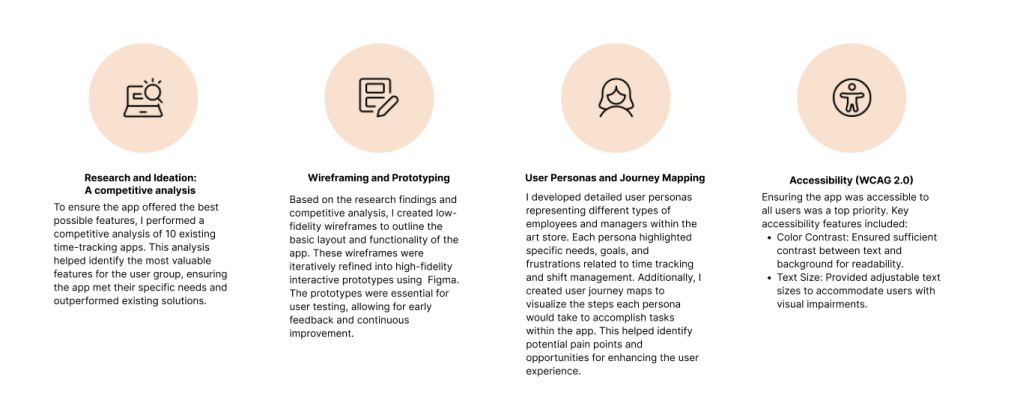
I followed the double diamond process, iterating on the solutions I came up with. I emphasized the following areas: Competitive analysis, wireframing, user personas and accessibility..


4. Reflections and Future Improvements
Working on the timesheet app for an independent art store was an invaluable experience that highlighted the strength of my background as an executive assistant. This previous role allowed me to quickly understand the business challenges the store owner faced, enabling me to design a solution that truly met their needs. My ability to empathize with users came naturally, thanks to my experience in anticipating and addressing the needs of executives and their teams.
However, this project also made me aware of areas for improvement, particularly in my design skills. Recognizing this, I am now enrolling in additional design-focused courses to enhance my abilities and bring even greater value to future projects.
Throughout this project, I gained significant experience in wireframing and prototyping. I deepened my understanding of the design thinking process, particularly the importance of empathy in creating user-centered designs. This iterative approach, which involves continuous testing and refinement, proved essential in developing a practical and user-friendly app.


